Categories
All categories
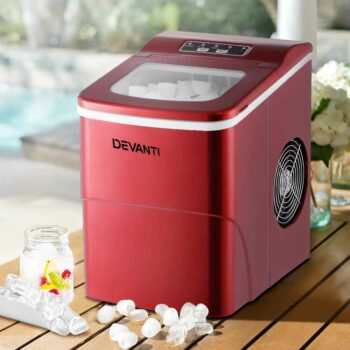
Keep cold drinks topped up with ice makers from Vartiss Store. The current range includes compact countertop machines producing bullet-shaped ice, higher-output portable models and a multifunction ice maker that also dispenses hot and cold water.
Current models vary in daily ice production, water-tank capacity, ice-bin size, ice-size selection, cycle time and power requirements. Vartiss Store is based in Bentleigh, Melbourne, with delivery available across Australia.
The best ice maker depends on how much ice you typically use, how much bench space is available and whether you need extra functions such as multiple ice sizes or water dispensing.
Specifications vary considerably between products. Always check the individual listing before ordering.
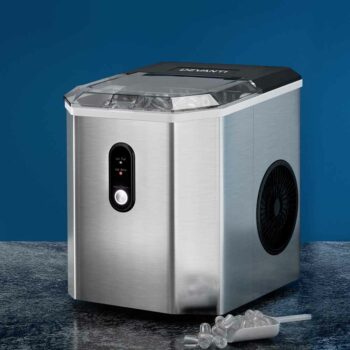
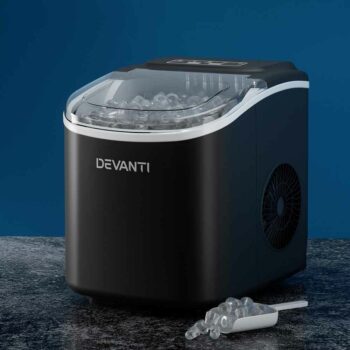
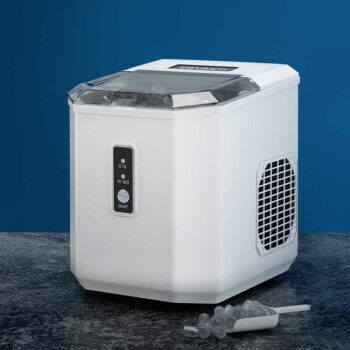
Several current ice makers are compact countertop units with stated production of up to 12kg of ice per 24 hours.
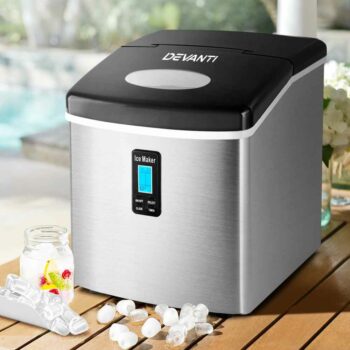
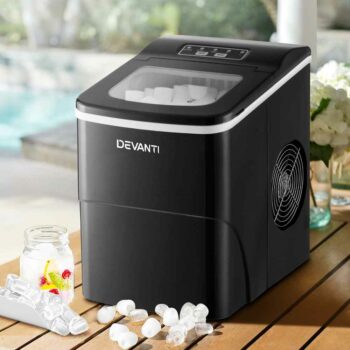
One current 12kg stainless steel model produces 9 bullet-shaped ice cubes per cycle in approximately 6 to 13 minutes, depending on ambient conditions. It has a 1.3L water tank, 0.6kg ice bin, 90W power rating and compact dimensions of approximately 29.5cm x 22cm x 29cm.
Selected 12kg models also offer different colours or ice-size options, so check the individual product specifications.
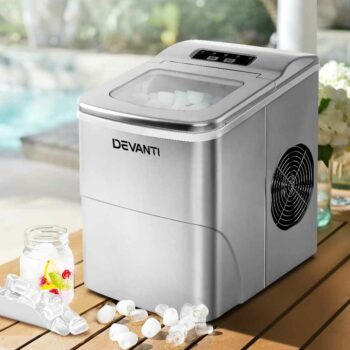
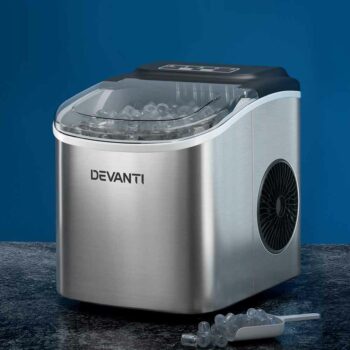
The current 15kg model provides a higher stated daily output while remaining a portable countertop machine.
It produces 9 bullet-shaped cubes per cycle in approximately 6 to 13 minutes, offers three ice-size options and has a 3L water tank with a 1kg ice bin. Its power rating is 120W.
This model also includes a timer and low-water and full-ice indicators.
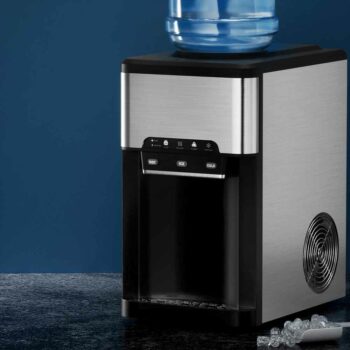
The largest-function current model combines an ice maker with separate hot and cold water dispensing.
It produces up to 20kg of ice per 24 hours, with 12 bullet-shaped cubes per cycle in approximately 7 to 11 minutes. It also includes a 3L cold-water tank and a 0.8L hot-water tank.
This model is substantially larger and more powerful than the standard countertop ice makers, measuring approximately 33cm x 47cm x 53cm and using 470W.
Daily output figures such as 12kg, 15kg or 20kg describe the maximum amount of ice a machine can produce over 24 hours under stated or suitable operating conditions.
They do not mean that the unit stores that full amount at one time.
For example:
Ice therefore needs to be removed from the basket periodically if you want the machine to continue producing throughout the day.
Current portable models are designed to produce ice in relatively short cycles, but actual timing can vary.
Several current 12kg and 15kg models produce 9 cubes in approximately 6 to 13 minutes, while the 3-in-1 machine produces 12 cubes in around 7 to 11 minutes.
Cycle time can be influenced by:
Use the individual product figures as a guide rather than assuming every cycle will take exactly the minimum stated time.
The current range primarily produces bullet-shaped ice rather than conventional freezer-tray cubes.
Selected models allow different ice sizes:
Ice shape, density and melting characteristics can differ from traditional solid freezer ice, so choose the product according to how you plan to use the ice.
Water capacity affects how often the machine needs refilling, while ice-bin capacity determines how much finished ice can remain in the machine before it needs to be removed.
Examples in the current range include:
A larger water tank can reduce refilling frequency, but it also generally contributes to a larger appliance footprint.
Portable ice makers can be useful for gatherings, BBQs, home bars and everyday drinks where freezer ice trays may not produce enough ice quickly enough.
When planning for entertaining:
The ice basket is generally intended for temporary collection rather than long-term frozen storage, so finished ice may need to be transferred elsewhere if it will not be used promptly.
Compact countertop designs may suit kitchens, office break rooms and other suitable indoor spaces where there is enough bench area, ventilation and access to an appropriate power outlet.
Before positioning an ice maker:
The larger 3-in-1 model requires substantially more space than a standard 12kg countertop ice maker and should be measured carefully before ordering.
One current model provides additional hot and cold water functions alongside ice production.
Its specifications include:
Hot water can cause burns. Use the child-lock function where appropriate and follow all product safety instructions.
Power requirements vary significantly throughout the range.
Current examples include:
This is why the category should not make a blanket claim that all ice makers use minimal energy.
Always check the individual power rating and use an appropriate Australian electrical outlet.
Ice makers combine electricity, water and refrigeration components and should be operated according to their individual instructions.
Regular cleaning helps reduce mineral build-up, residue and stale water inside an ice maker.
Cleaning methods and self-cleaning functions vary between products, so follow the individual manual.
Ice makers form part of the wider Home Appliances range at Vartiss Store.
For other countertop kitchen appliances, browse our air fryers and microwave ovens.
Browse ice makers at Vartiss Store and compare daily production, water-tank size, ice-bin capacity, cycle time, ice-size options, power and appliance dimensions before choosing the right model.
Pickup from Bentleigh may be available by prior appointment. Delivery is free to Australian capital cities, while regional and remote towns have a flat $30 delivery charge. Delivery availability and timeframes depend on the product and destination.
Compare compact 12kg machines, higher-output 15kg models and the multifunction 20kg ice maker and water dispenser to find an option suited to your kitchen, entertaining area or workplace.
The current range primarily includes portable countertop bullet-ice makers with daily production ratings around 12kg to 15kg, plus a multifunction 3-in-1 model producing up to 20kg of ice per 24 hours and dispensing hot and cold water.
Several current models produce 9 cubes in approximately 6 to 13 minutes. The current 3-in-1 model produces 12 cubes in approximately 7 to 11 minutes. Actual cycle time can vary with operating conditions.
Storage capacity is much smaller than daily production capacity. Current ice bins range from approximately 0.6kg to 1.8kg depending on the model.
The current range primarily produces bullet-shaped ice. Selected models offer two or three ice-size settings.
Most current portable ice makers use a manually filled water tank and do not require permanent plumbing. The current 3-in-1 water-dispenser model can also use a compatible bottled-water supply where stated.
Power consumption varies significantly between products, so no single efficiency claim applies to the whole category. Current examples range from approximately 90W to 470W.
Selected current models include self-cleaning functions, but this feature is not universal. Check the individual listing and cleaning instructions.
The ice basket is intended to collect ice as it is produced rather than act as a long-term freezer. If you need to store ice for an extended period, transfer it to suitable frozen storage.
Delivery is free to Australian capital cities. Regional and remote towns have a flat $30 delivery charge. Delivery availability and timeframes depend on the product and destination.