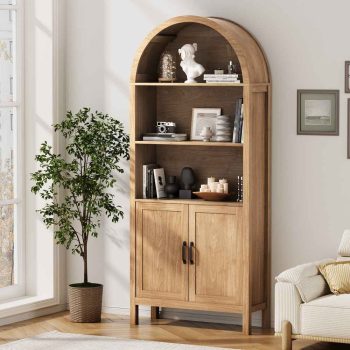
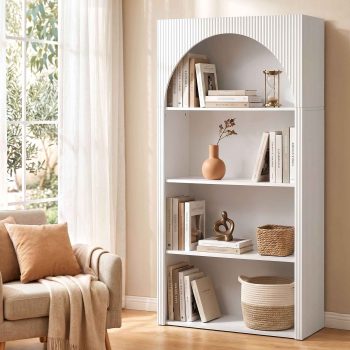
A bookcase can look right in a room but still be too shallow for your books, too narrow for storage baskets or awkward to reach. Start with what you need to store, then compare the shelf openings, load limits and space available.
This bookcase buying guide explains what to measure before choosing from our bookcases and shelves collection, whether you are organising a home library, study or display area.
Gather a few representative items: your tallest hardback, deepest folder, storage basket or favourite display piece. Measure them and compare those measurements with the usable shelf space.
Paperbacks, large art books and office folders need different shelf depths and opening heights. The overall cabinet dimensions include its frame, backing and supports, so they do not tell you exactly what will fit inside.
Allow some spare room for handling items and future additions. If you want to conceal paperwork or smaller belongings, consider a model with drawers or cupboard storage.
Check the unit’s full assembled width, depth and height. Mark its footprint on the floor, allowing for skirting boards, nearby power points, curtains and door swings.
Make sure drawers and cupboard doors can open without blocking your route through the room. For a corner unit, compare both sides of its footprint rather than assuming it fits every corner.
Think about everyday reach as well as maximum storage. A tall bookcase uses vertical space, but frequently used items should remain accessible without climbing on the furniture.
Traditional rows of shelves can make it straightforward to organise books by size or subject. Cube and compartment designs divide belongings into smaller groups, but each opening needs to suit your items.
S-shaped, geometric and other display layouts can create space for ornaments alongside books. Check the actual shelf depth and supports; a decorative shape does not establish suitability for a full collection of heavy books.
For ladder-style or open-backed shelves, check how items will be supported and whether the design must stand against a wall. Use a shelving unit as a room divider only if the manufacturer permits that placement and its securing requirements can be met.
Books can add considerable weight. Check the stated capacity per shelf and for the complete unit, including any limits for drawers or the top surface.
A total capacity cannot automatically be divided equally between shelves. Likewise, a per-shelf rating does not mean you can multiply it by the number of shelves unless the manufacturer confirms the total limit.
Follow the instructions for distributing weight. If a capacity is missing or unclear, ask before ordering. A shelf that suits lightweight decorations may not suit densely packed books.
Read the stated construction rather than judging from the finish. Solid timber, engineered wood, metal and glass have different care requirements; a timber-look surface does not necessarily mean solid wood.
If shelves are adjustable, check which shelves move and the available positions. Some shelves or dividers may be fixed structural parts and must remain in place.
Follow the recommended cleaning method and protect surfaces beneath pots or drinks. Do not assume indoor shelving is waterproof or suitable for a damp room.
Check carton dimensions against your delivery route and allow space for assembly. Install all specified backing panels, braces and fixings; they may contribute to the unit’s stability.
Anchor freestanding bookcases to reduce toppling risk, following the manufacturer’s instructions and using fixings appropriate for your wall. Keep heavier items low and prevent children from climbing on shelves. These precautions apply even when furniture appears stable.
Wall shelves need suitable load-bearing supports for the shelf and its contents. Check the wall construction and concealed services before drilling, and get professional help if unsure. For more guidance on securing furniture, see the ACCC’s toppling furniture advice.
Browse our bookcases and shelves, review the Shipping & Delivery Policy, or contact us if a shelf measurement or capacity needs clarification before ordering.