A pressure washer should suit the surfaces you need to clean, the water supply available and how often you will use it. The largest PSI figure on a product listing is only one part of that decision.
This pressure washer buying guide explains the specifications and practical questions to check before comparing models in our outdoor power equipment collection. Availability and features vary by model.
Pressure describes how forcefully water is delivered and is commonly shown in PSI or bar. Flow rate describes the volume of water delivered, usually in litres per minute or litres per hour. Both matter when comparing cleaning performance.
Check whether a listing quotes maximum pressure, rated working pressure or both. Compare like-for-like figures where possible, and ask for clarification if the operating specification is unclear.
A headline pressure rating does not establish suitability for every surface or continuous commercial work. The pump design, permitted operating time, nozzle and manufacturer’s intended use also matter.
| Power source | Questions to ask |
|---|---|
| Electric | Is a suitable protected power outlet accessible? What cable restrictions, electrical requirements and operating limits apply? |
| Petrol | Can the engine be operated safely outdoors? Can you manage fuel, engine maintenance, weight, noise and storage? |
Petrol power removes the need for an electrical supply to run the engine, but it does not remove the need for a suitable water supply. Electric models still require careful electrical safety around water.
For regular business use, check that the manufacturer supports the intended workload and commercial application. A high PSI number or the word “heavy-duty” is not a substitute for that confirmation.
Concrete, painted surfaces, timber, grout and vehicle finishes can respond differently to pressure washing. Start with the surface manufacturer’s cleaning advice and the washer’s instructions.
For a permitted application, use the recommended nozzle, pressure and working distance, and test an inconspicuous area first. Avoid assuming that a narrow jet or turbo nozzle is suitable for delicate finishes.
Do not use high-pressure water on electrical equipment or materials that may contain asbestos. Washing can damage coatings or force water into joints and openings. Cleaning a surface also does not automatically disinfect or sanitise it.
Confirm the required inlet flow, inlet pressure and water temperature. A longer high-pressure hose can improve reach, but the hose, fittings and accessories must be compatible with the machine.
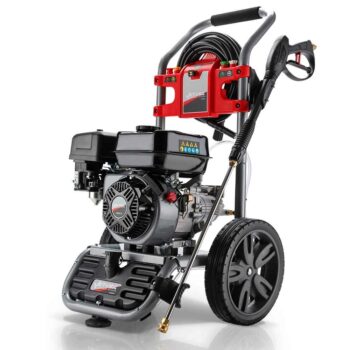
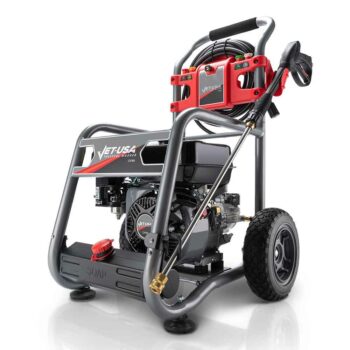
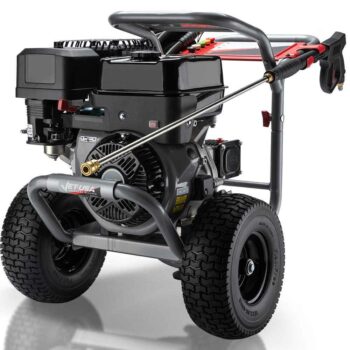
Check the package contents rather than relying on promotional photographs. A surface cleaner, detergent bottle, hose reel or alternative nozzle may be included, optional or unavailable for a particular model.
Use only a water source and detergent system approved by the manufacturer. Do not assume every machine can draw from a tank or accept the same fittings. Follow the start-up procedure, including establishing the required water supply before operating the pump.
Read the full manual before use. Wear the specified protective equipment, keep children and bystanders clear, and never direct the spray at a person or animal. Use appropriate electrical protection and keep connections away from water.
Petrol engines produce carbon monoxide. Operate them outdoors, away from doors, windows and air intakes; never run them in a garage or other enclosed or partly enclosed area. For further guidance, see the CDC pressure washer safety advice.
Check the model’s instructions for maintenance, storage, pressure release and any limits on operating time. These requirements affect whether a machine is practical for your workload.
Browse our outdoor power equipment, check the delivery policy, or contact us with the model and task you have in mind.