Choosing a bed frame involves more than selecting a colour or bed size. The frame needs to suit your mattress, fit through your home and leave enough usable space once it is assembled.
This bed frame buying guide covers the measurements, support details and storage choices to check when comparing our beds and bed frames.
Check the mattress dimensions and the frame’s specified compatible mattress size. Names such as “Queen” or “King Single” are a useful starting point, but measurements can vary by manufacturer and country.
For example, an Australian Queen mattress is commonly around 153cm wide and 203cm long. That is the mattress size, not the assembled frame size. Headboards, side rails and footboards can make the complete bed wider or longer.
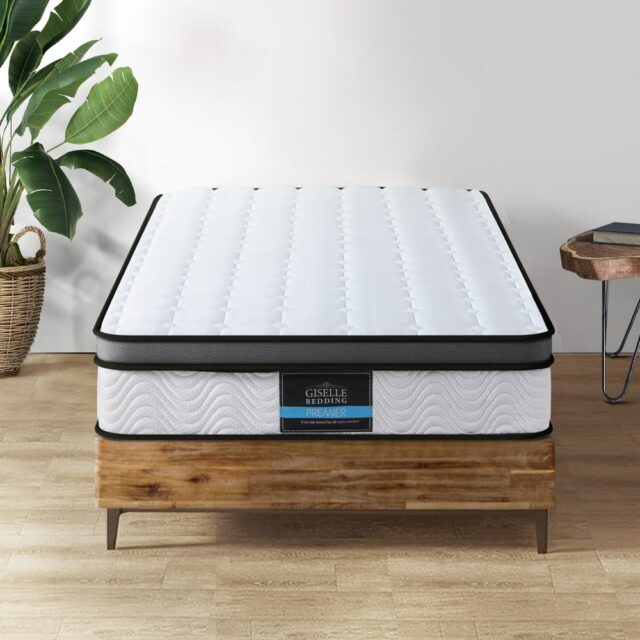
If keeping an existing mattress, measure it and check its support requirements. If buying both items, compare their specifications together. Do not assume a mattress is included unless the listing expressly says so.
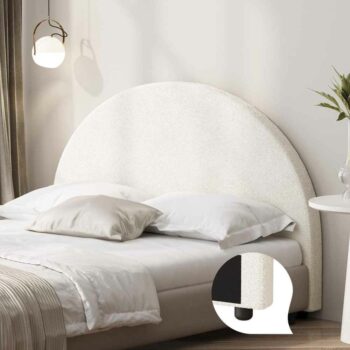
Use the bed’s overall assembled width and length to mark its footprint on the floor. Check headboard height against windows, wall fittings and power points.
Allow space for bedside tables, door swings, wardrobes and a comfortable route around the bed. The clearance you need depends on your room and how you move through it; a single suggested gap will not suit every household.
Also consider the finished sleeping height: the height of the mattress support plus the thickness of your mattress. A tall upholstered frame can look quite different once a deep mattress is added.
Compare the slat arrangement, centre support and any support legs described in the listing. The mattress manufacturer’s requirements for slat spacing and base construction are important, including for warranty purposes.
Read the frame’s stated load limit and how that limit is defined. If it is unclear whether the mattress weight is included, ask before ordering. A metal or timber appearance alone does not establish a frame’s capacity.
Do not assume every slatted frame is suitable for every foam, spring or hybrid mattress, or for an adjustable-bed system. Confirm the specific combination.
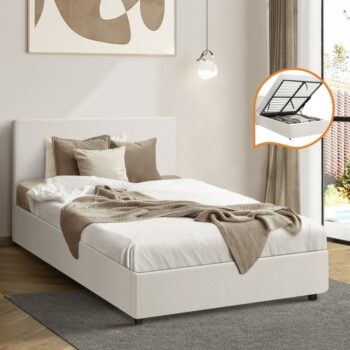
Storage beds can make use of space beneath the mattress, but the way they open affects the room layout.
Follow the manufacturer’s instructions for lift mechanisms and keep children clear during operation. Storage space is not a play area.
Timber, engineered wood, metal and upholstered frames offer different appearances and care requirements. Check the materials stated for the specific model rather than judging construction from a photograph.
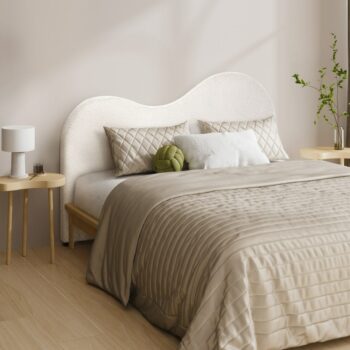
For upholstery, consider cleaning access, fabric texture and the likelihood of marks in your household. For hard surfaces, check the recommended cleaning method and protect the finish during assembly.
Materials alone do not guarantee silent operation, a particular lifespan or environmental credentials. Look for specific, supported product information when those features matter to your decision.
Check package dimensions against doorways, stairs and lifts, including turns along the delivery route. A bed may arrive in several cartons, and those cartons may not all arrive together.
Read the assembly requirements and allow room to lay out the components. Use the supplied instructions and install all specified supports. Check fixings and support legs as directed after assembly and during use.
Compare our beds and bed frames and read the Shipping & Delivery Policy. If a compatibility or access measurement is unclear, contact us before ordering.