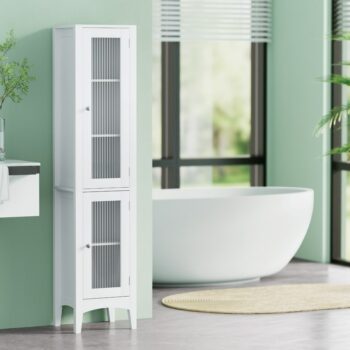
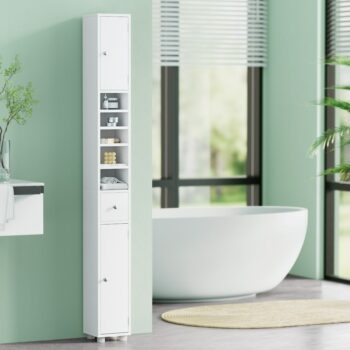
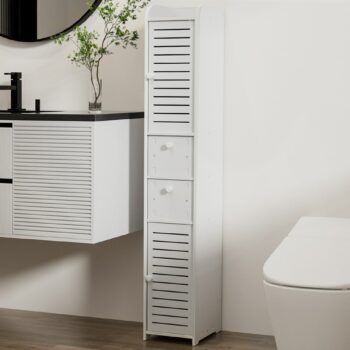
Useful bathroom storage makes everyday items easier to reach without crowding the room. Before choosing a cabinet, check its footprint, how the doors open and whether its materials are suitable for the intended position.
This bathroom storage buying guide helps you compare cabinets and cupboards within our bathroom collection. Read the specifications for each model rather than assuming all bathroom furniture has the same features.
Measure the available width, depth and height, allowing for skirting boards, pipes, towel rails and nearby fittings. Check the cabinet’s complete assembled dimensions, including handles and feet.
Mark the footprint on the floor and test the room’s door swing. Make sure you can use the basin, toilet and shower comfortably and still open the cabinet’s doors or drawers.
For over-toilet storage, compare the unit’s internal opening with the cistern and plumbing. Leave access to the flush controls, water connections and any lid or panel that must open for maintenance.
List the items you want to store, then compare their sizes with the usable shelf and drawer space. Folded towels need different dimensions from tall bottles or spare toilet rolls.
Open shelves make frequently used items visible; doors can conceal supplies. If shelves adjust, check the available positions and whether the stated load limits apply to each shelf or the whole unit.
A tall cabinet can use vertical space, but the highest shelves may be awkward to reach. Keep heavier items low and choose a layout that does not require routine climbing or stretching.
A cabinet described as bathroom furniture is not necessarily waterproof or suitable for direct shower spray. Check the manufacturer’s placement and care instructions for the exact model.
Moisture resistance and waterproofing are different claims. A coated surface does not mean every joint, edge or underside can remain wet without damage.
Place the cabinet where its instructions permit, wipe up splashes promptly and maintain ventilation. Do not assume a particular finish will prevent mould or tolerate every bathroom cleaner.
A freestanding unit needs a suitable level surface and a safe anchoring plan. A wall-mounted cabinet needs supports appropriate for the cabinet, its contents and the wall construction.
Check whether mounting or anti-tip hardware is supplied and whether additional wall-specific fixings are needed. Supplied screws are not automatically suitable for every wall.
Before drilling, have the location checked for concealed services and avoid damaging waterproofing. Get suitable professional help if the wall construction, mounting requirements or location is uncertain.
Read the assembly requirements and allow room to lay out the panels. Fit all specified supports, drawer stops and restraints, and follow the manufacturer’s load limits.
Anchor furniture to reduce toppling risk and keep children from climbing on shelves or drawers. For further guidance, see the ACCC’s toppling furniture advice.
Choose storage locations for medicines and cleaning products according to their own labels, including temperature, moisture and child-access requirements. A normal cabinet door is not a child-resistant lock.
Browse our bathroom furniture and storage, review the delivery policy, or contact us if you need to clarify a cabinet measurement or installation detail.